7 Daily Practice Routines to Master Classical Dance
Understanding the Challenge: Why Home Practice Feels Overwhelming
As an advanced dance student, you've likely experienced that familiar frustration – you know the steps, you understand the theory, but translating that knowledge into consistent improvement at home feels like an uphill battle. Many dance students find themselves caught between their ambitious dance goals and the reality of practicing without direct teacher supervision.
The truth is, mastering classical Indian dance forms requires more than just memorizing sequences. It demands a deep understanding of rhythm, expression, and the spiritual connection that makes each movement meaningful. When you learn dance at home, you're not just practicing steps – you're cultivating discipline, artistry, and cultural appreciation.
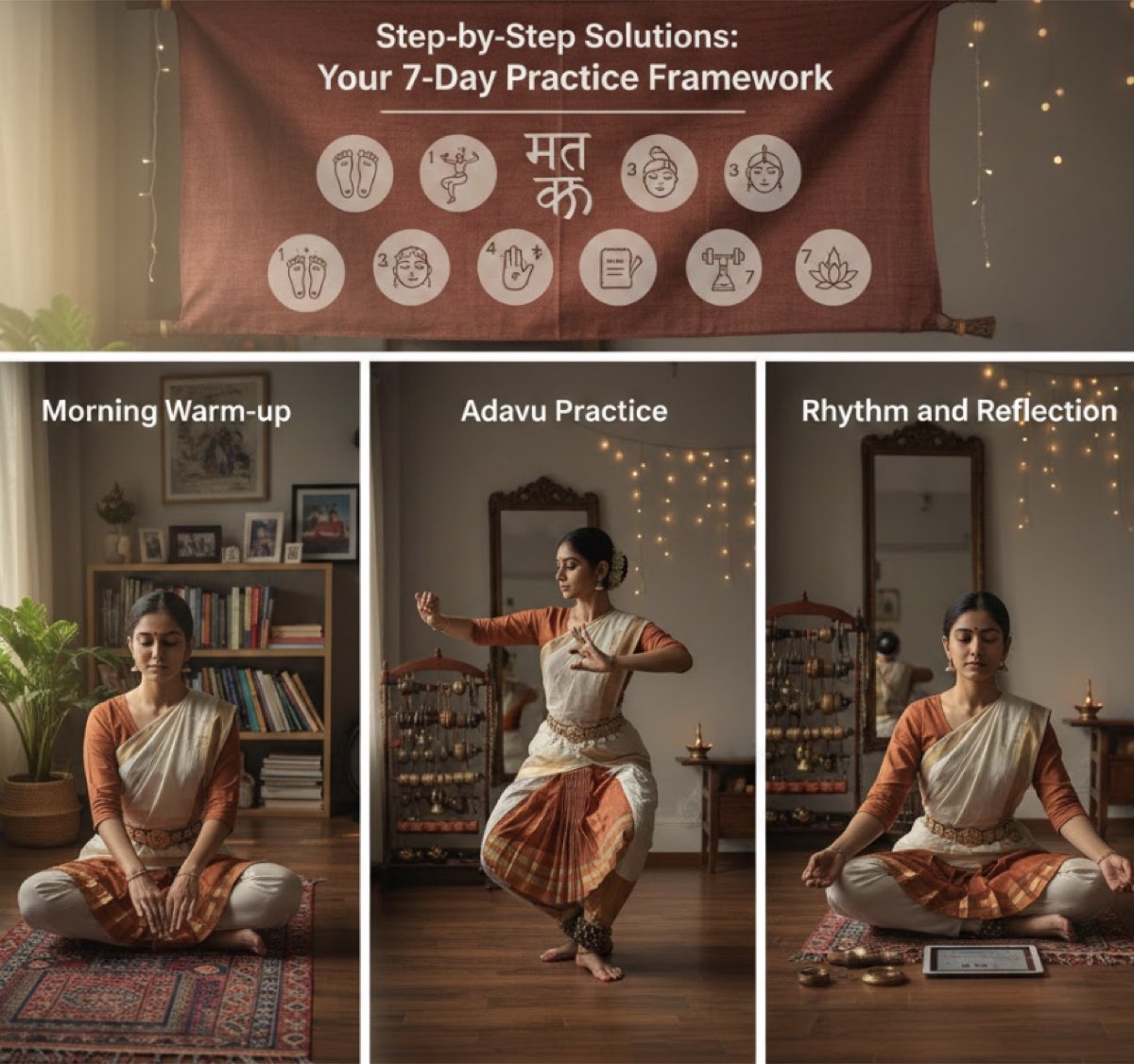
Step-by-Step Solutions: Your 7-Day Practice Framework
1. Morning Warm-up and Flexibility (15-20 minutes)
Begin each day with gentle stretching focused on ankles, knees, and spine. Include neck rotations and shoulder rolls – essential for maintaining the graceful posture required in Bharatanatyam or Kathak. This beginner dance foundation remains crucial even for advanced practitioners.
2. Adavu/Basic Step Practice (20-25 minutes)
Dedicate time to perfecting fundamental movements. Whether you're working on Bharatanatyam's sixteen adavus or Kathak's tatkar variations, consistency in basic steps forms the backbone of your dance improvement journey.
3. Rhythm and Tala Training (15 minutes)
Practice clapping different talas while reciting bols. This dance practice strengthens your internal rhythm and prepares you for complex choreographic sequences. Use a metronome or tabla app to maintain steady tempo.
4. Expression and Abhinaya Work (20 minutes)
Focus on facial expressions and hand gestures (mudras). Practice conveying emotions through your eyes – a cornerstone of classical Indian dance. Work on specific bhava expressions, starting with the navarasas (nine emotions).
5. Choreography Review and Refinement (25-30 minutes)
Revisit pieces you're currently learning. Break complex sequences into smaller segments, perfecting each before combining them. This systematic approach accelerates your dance journey significantly.
6. Strength and Stamina Building (15 minutes)
Include exercises that build the specific muscle groups used in your dance form. Calf raises for strong aramandi positions, core work for stability, and leg exercises for powerful jumps and spins.
7. Cool-down and Reflection (10 minutes)
End with gentle stretching and a few minutes of meditation or quiet reflection on your practice session. This helps consolidate learning and maintains the spiritual aspect of classical dance.
Real Stories from the Dance Community
Priya, an advanced Odissi student from California, struggled with maintaining consistent practice until she implemented this structured routine. "I used to practice randomly for hours and see little progress," she shares. "Breaking it into focused segments transformed my dance improvement. Now I can see measurable progress in my tribhangi and chowk positions."
Practical Exercises and Action Items
Week 1-2: Foundation Building
- Record yourself performing basic adavus daily
- Practice one new mudra combination each day
- Master three different tala patterns
Week 3-4: Integration and Flow
- Combine learned elements into short sequences
- Focus on smooth transitions between movements
- Work on maintaining expression throughout complex passages
Week 5-6: Artistic Development
- Choose a simple padam or thumri to interpret
- Experiment with different emotional expressions
- Practice performing for an imaginary audience
Tracking Your Progress: Measurable Milestones
Document your dance journey with these tracking methods:
- Video Journals: Record weekly progress videos focusing on specific techniques
- Practice Logs: Note daily practice duration, focus areas, and breakthrough moments
- Flexibility Measurements: Track improvements in aramandi depth, neck flexibility, and spine extension
- Rhythm Accuracy: Test your ability to maintain complex tala patterns without external support
- Expression Range: Challenge yourself to convey increasingly subtle emotional nuances
Set monthly dance goals that align with your long-term aspirations. Whether you're preparing for an arangetram or simply deepening your cultural connection, consistent measurement keeps you motivated and on track.
Overcoming Common Home Practice Obstacles
Every dance student faces unique challenges when practicing at home. Limited space, lack of mirrors, or feeling disconnected from the dance community are common concerns. Remember that many renowned dancers have honed their skills in modest settings – what matters is your dedication and smart practice strategies.
When motivation wanes, reconnect with your "why." Classical Indian dance is not just about perfect technique; it's about storytelling, cultural preservation, and personal expression. Each practice session contributes to this larger purpose.
Your Journey Continues
Mastering classical Indian dance is a lifelong journey that rewards patience, dedication, and consistent practice. These seven daily routines provide the structure needed to transform your home practice from scattered efforts into focused, productive sessions that yield real results.
Remember, every expert was once a beginner dance student who chose to persist through challenges. Your dance improvement happens one practice session at a time, one perfectly executed adavu at a time, one heartfelt expression at a time.
The dance community is rooting for your success, and with these proven practice routines, you're well-equipped to achieve your artistic goals. Trust the process, celebrate small victories, and let your passion for dance guide you through each daily practice session.