Arangetram: The Sacred Debut of a Bharatanatyam Dancer
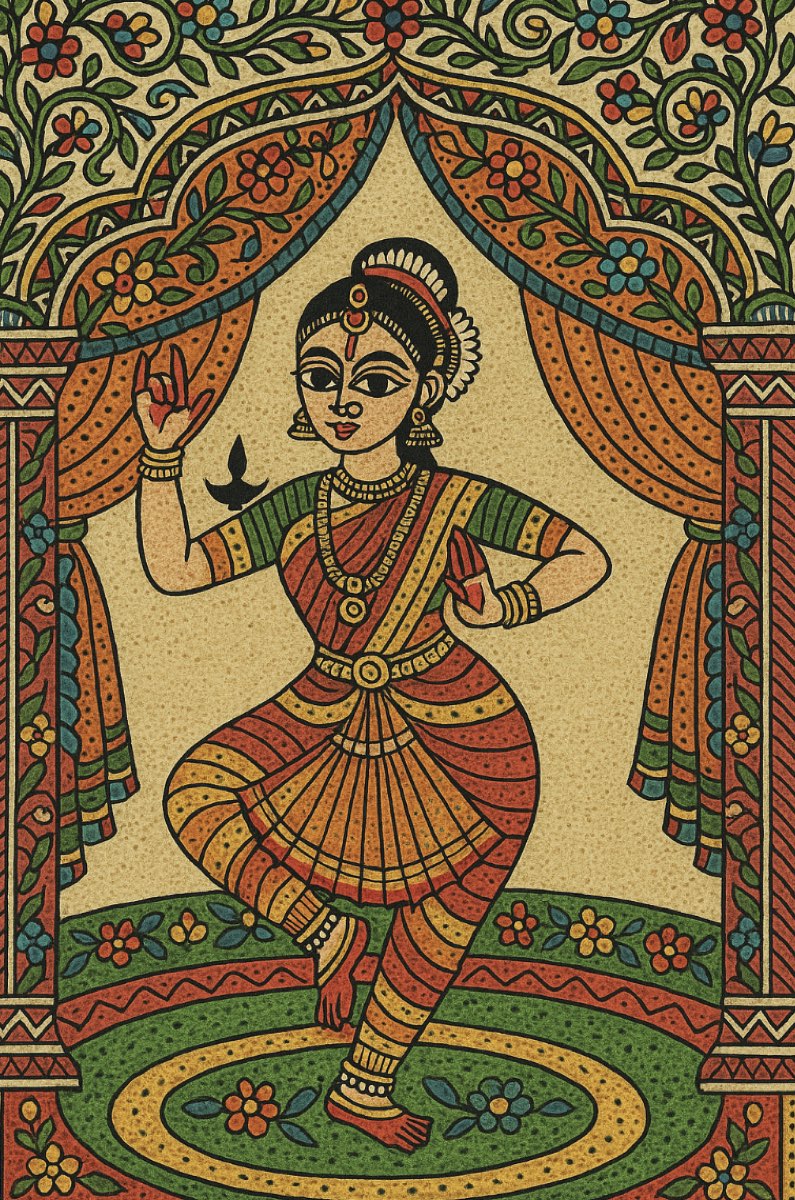
The Sacred Ascent to the Stage
In Bharatanatyam, one of India’s most treasured classical dance forms, there comes a milestone that every student dreams of—the Arangetram. The word comes from Tamil, with “Arangu” meaning stage and “Etram” meaning to climb or ascend. But it’s more than just stepping onto a stage. An Arangetram is the result of years of practice, discipline, and devotion. It’s a transformation—where a student becomes a full-fledged performer.
For anyone learning Bharatanatyam, the Arangetram is more than a recital. It’s a rite of passage, linking you to centuries of tradition and spiritual expression. Let’s take a closer look at what makes this tradition so meaningful.
History and Spiritual Roots
The origins of Arangetram go back to temple culture in South India. Dancers, often devadasis, dedicated their art as an offering to the divine. A dancer’s first performance wasn’t just a show—it was seen as a spiritual initiation, a sign they were ready to serve through dance.
Though times have changed, the essence remains. Arangetram is still seen as an act of devotion, demanding immense effort and focus. The path is guided by principles from the Natya Shastra, an ancient text that continues to shape Indian classical dance.
Building the Foundation
Getting ready for Arangetram takes years of training in the basics:
- Adavus: The core steps that every dancer must master.
- Mudras: Hand gestures that tell stories and convey meaning.
- Abhinaya: Expressions and emotions that bring the stories to life.
- Aramandi: The half-sitting posture that defines Bharatanatyam’s strength and beauty.
Under the guidance of a guru, students spend countless hours perfecting these elements until every movement feels natural and precise.
The Arangetram Performance
An Arangetram is usually a solo performance that can last several hours. It’s carefully structured to highlight the dancer’s training and artistry:
- Pushpanjali: An offering of flowers to the gods.
- Alarippu: A warm-up piece introducing rhythm and movement.
- Jatiswaram: A lively, rhythmic sequence.
- Shabdam: A piece combining dance and storytelling.
- Varnam: The centerpiece—long, complex, and emotionally rich.
- Padam: Slower pieces focusing on subtle expression.
- Tillana: A joyful, fast-paced finale.
- Mangalam: A short ending prayer of thanks.
Live Carnatic music accompanies the performance, with singers, instrumentalists, and the nattuvanar (conductor) guiding the rhythm and energy.
The Challenges Along the Way
Preparing for Arangetram isn’t easy. Dancers face challenges like:
- Stamina: Training for a multi-hour solo performance.
- Focus: Memorizing choreography and keeping concentration.
- Expression: Growing the emotional maturity to portray deep stories.
- Balance: Managing practice alongside school, college, or work.
It takes persistence, family support, and above all, love for the art to cross this milestone. Many dancers say the journey itself is just as transformative as the final day on stage.
Getting Ready: Practical Tips
If you’re working toward your Arangetram, here are a few things that help:
- Practice daily: Even short sessions add up.
- Stay fit: Try yoga or Pilates to build strength and flexibility.
- Visualize: Picture your performance when you can’t practice physically.
- Immerse in music: Listen to Carnatic songs to feel the rhythm naturally.
- Work on expressions: Use a mirror to refine abhinaya.
- Record yourself: Watching videos of your practice is a great way to spot improvements.
Remember, Arangetram isn’t just about flawless technique. It’s about sharing the spirit of Bharatanatyam with your audience.
A New Beginning
Though Arangetram is often seen as the “final test,” it’s really a beginning. It opens the door to new opportunities—performances, collaborations, teaching, or even choreography. For many, it becomes a lifelong bond with Bharatanatyam.
This milestone connects dancers not just to their own journey, but to the centuries-old tradition of Indian classical dance. It’s a bridge between ancient roots and today’s world.