Bharatanatyam: From Temple Tradition to Online Classes
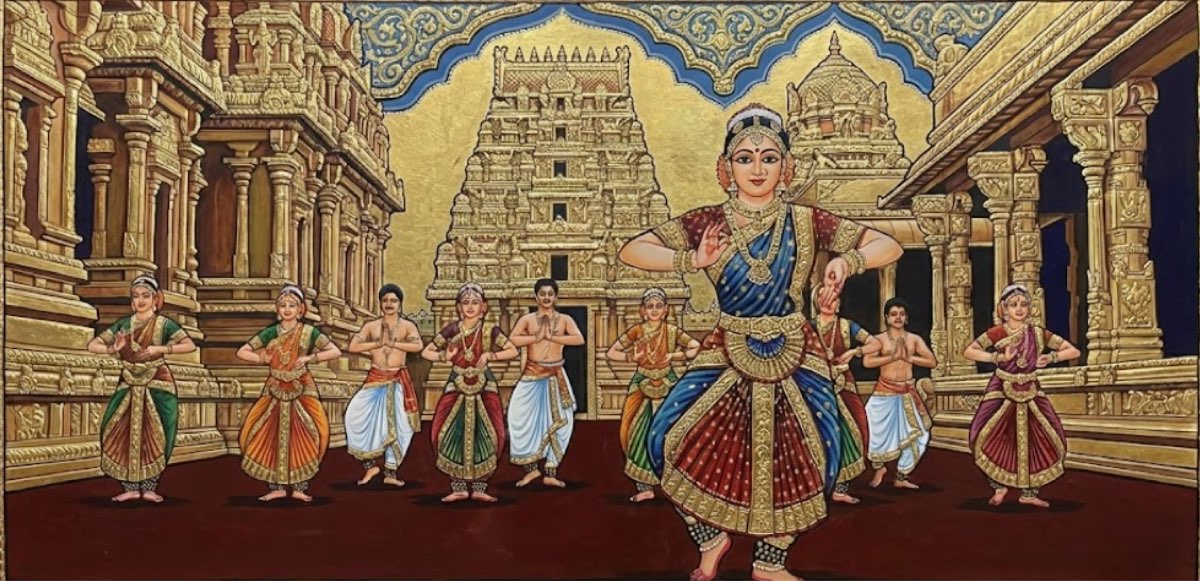
“A Bharatanatyam dancer steps forward not only to perform, but to offer.”
What Is Bharatanatyam?
Bharatanatyam is a complete language, of rhythm (tāla), melody (rāga), expression (abhinaya), and storytelling.
It has two main parts that work together:
Nritta (Pure Dance)
This is the geometry of movement, adavus, footwork patterns, clean lines, and rhythmic precision. It’s where discipline lives.
Nritya (Expressive Dance)
This is where the dance begins to speak, through mudras, facial expressions, and narrative. A single eyebrow can suggest doubt. A soft smile can become divine love.
Bharatanatyam is a bridge between the inner world and the outer world.
The Sacred Science of Dance: Natya Shastra and Early Bharatanatyam
The origin of Bharatanatyam begins with the foundational framework of Indian performance arts: the Natya Shastra.
Written centuries ago, it describes:
- Movement and posture
- Hand gestures (hasta mudras)
- Facial expression and emotion (rasa and bhava)
- Stagecraft and audience experience
Even if a modern student is learning basic adavus today, the logic behind those lines as to why the torso is held a certain way, and why the stance must be grounded echoes from these classical principles.
Bharatanatyam is like a river: the Natya Shastra is one of the earliest sources feeding it.
From Temples to Tradition: The Devadasi Heritage
For a long time, what we now call Bharatanatyam belonged to the temple world of South India, especially Tamil Nadu and was performed by devadasis, women, whose lives were tied to temple service, and whose art grew inside that space.
This part of history is complex and deserves respectful clarity:
- These dancers were custodians of tradition, technique, and abhinaya.
- Their art was deeply tied to devotion, ritual calendars, and cultural patronage.
- Over time, social and political changes reshaped how society perceived them, and not always kindly.
But the dance itself didn’t vanish. The language of movement, the expressiveness, the devotional tone, these travelled forward, even as the setting changed. Over time, the form moved from temple spaces to public stages.
The story of Bharatanatyam is the story of an art form that survived profound transformation without losing its soul.
The Name “Bharatanatyam”: How the Form Was Framed
Many ask: What does Bharatanatyam mean?
A commonly shared interpretation breaks it into:
- Bha – Bhava (emotion)
- Ra – Raga (melody)
- Ta – Tala (rhythm)
- Natyam – dance/drama
Bharatanatyam captures emotional truth, musical intelligence, rhythmic precision, and dramatic clarity, combined into one art.
The Thanjavur Quartet: Codifying the Margam
A major milestone in the evolution of Bharatanatyam was the work associated with the Thanjavur Quartet (Chinnayya, Ponnayya, Sivanandam, and Vadivelu), who contributed significantly to organizing repertoire, composing music, and shaping performance structure.
If we consider Bharatanatyam as a language, the Margam is its classic “curriculum”, the structured sequence used in performances and training.
Why the Margam Matters (Especially for Students)
A well-structured learning path prevents “random dance learning” and builds technique step-by-step:
- Alarippu (warming up the body and rhythm)
- Jatiswaram (pure dance + musicality)
- Shabdam (early abhinaya + narrative)
- Varnam (the centerpiece: stamina + expression)
- Padam/Javali (emotional depth through abhinaya)
- Tillana (pure dance finale, bright and rhythmic)
This structure is one reason Bharatanatyam adapts so well to structured online Bharatanatyam courses, because progress is naturally measurable.
The 20th Century Revival: A New Start in Public
In the early 1900s, Bharatanatyam faced a lot of criticism and restrictions.But around the same time the dance form started to come back and gain respect on public stages.
Dancers, scholars, and supporters worked to present Bharatanatyam as a classical art of India, something valuable that should be protected, performed, and taught to many people.
This change was not easy. People debated what was “real” Bharatanatyam, who it belonged to, and who had the right to represent it.
Over time, Bharatanatyam moved from temple spaces to big theatres around the world. Once it reached the stage, it began spreading, first across India, and then to other countries too.
Bharatanatyam Today: Global, Yet Rooted
Today, you can find Bharatanatyam students:
- in Chennai and Coimbatore
- in Mumbai and Bangalore
- in London, Toronto, Sydney, Singapore, and New Jersey
And many of them share the same starting point:
“I’ve always wanted to learn… but life got busy.”
Why Online Bharatanatyam Classes Work So Powerfully (When Taught Right)
Yes, when the teaching is designed for online learning, not just “offline teaching on Zoom.”
Real progress comes from:
- real-time, 2-way video feedback
- step-by-step correction of aramandi posture
- rhythm training with clear counts and repetition
- guided practice videos between live classes
When done well, online Bharatanatyam classes can actually offer advantages: you can rewatch key corrections, practice in your own space, and stay consistent even when travel or work gets hectic.
Lineage: The Guru-Shishya Parampara Lives On
Bharatanatyam has always been passed on through guru-shishya parampara, a relationship where technique, artistry, and values are shared with care.
Even online, the essence of this remains the same:
- the teacher watches closely
- the student repeats, refines, and grows
- the learning is personal, not generic
The medium changes. The intention doesn’t.