What to Wear for Online Bharatanatyam Classes vs Performance
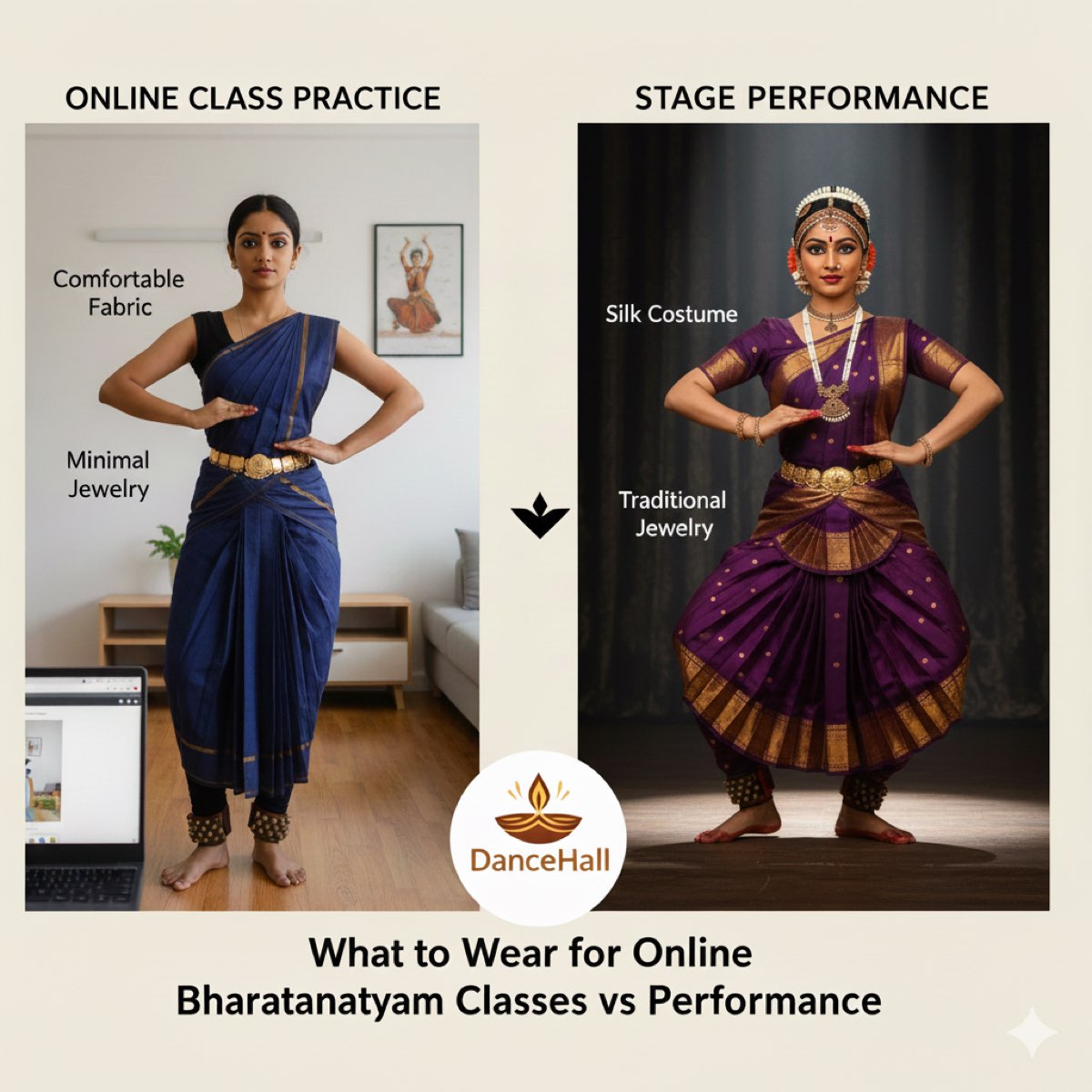
Online Bharatanatyam classes have made learning and performing more accessible than ever, and what you wear while practicing or performing plays a big role in how you move, feel, and express yourself. Clothing in Bharatanatyam is not just about appearance, it supports posture, clarity of movement, comfort, and confidence.
For beginners especially, it can be confusing to know what’s appropriate for daily practice and what’s meant only for performances. Let’s break it down simply, so you know exactly what to wear for practice and how that changes for a performance.
Why the Right Outfit Matters in Bharatanatyam
Bharatanatyam is a structured dance form with strong postures, clear lines, and rhythmic footwork. The right clothing:
- Helps teachers see your posture clearly
- Allows free movement in araimandi
- Supports long practice sessions
- Enhances expressions and storytelling during performances
Whether you’re attending in-person lessons or learning through online Bharatanatyam classes, what you wear can make a noticeable difference in your progress.
What you wear for Bharatanatyam practice helps shape your foundation. What you wear for performance brings the art to life. Both are equally important.
Choose comfort while learning, tradition while performing, and always dance with confidence and joy. Over time, your clothing will feel like a natural extension of your movement, and that’s when the magic truly happens.
What to Wear for Online Bharatanatyam Class Practice
Practice wear should be comfortable, simple, and functional. The focus here is learning, not presentation.
1. Practice Saree or Practice Costume
A stitched practice saree or Bharatanatyam practice costume is ideal.
- Usually made of cotton or soft fabric
- Has pleats stitched in front for ease
- Allows teachers to see leg positions clearly
- Lightweight and breathable
For beginners, this helps build correct posture from the start.
2. Top or Blouse
A well-fitted blouse or top is important.
- Should not be too loose or too tight
- Sleeveless or short-sleeved is common
- Avoid heavy designs or decorations
The goal is freedom of movement and clarity of shoulder and arm lines.
3. Leggings or Pyjama Pants
Most practice costumes come with:
- Cotton leggings or pyjama-style pants
- Stretchable fabric for comfort
- Full-length to allow floor work
Avoid jeans or stiff pants, they restrict movement and posture.
4. Hair for Practice
Hair should be:
- Neatly tied back in a bun or braid
- Away from the face
- Secure enough for movement
No need for flowers or ornaments during practice.
5. Jewelry: Keep It Minimal
For daily practice:
- No heavy jewelry
- Small earrings or studs are fine
- Avoid bangles or necklaces
This prevents distraction and discomfort during long sessions.
6. Footwear (or No Footwear)
Bharatanatyam is traditionally danced barefoot.
- Practice barefoot on a safe surface
- Use ankle bells (salangai) only when advised by your teacher
- For online practice, ensure the floor is not slippery
Students in online Bharatanatyam classes should check camera framing to ensure footwork is visible.
What to Wear for Bharatanatyam Performance
Performance attire is about presentation, tradition, and storytelling. It transforms the dancer into the character.
1. Bharatanatyam Costume
A full Bharatanatyam costume is usually:
- Brightly colored (silk or silk-blend)
- Includes pleats that fan out during movement
- Designed to highlight leg positions and geometry
The costume enhances every posture and movement on stage or screen.
2. Blouse and Costume Fit
For performances:
- Blouse should be well-fitted and secure
- Sleeves are traditionally short
- Costume should allow deep araimandi
Always try your costume at least once before the performance.
3. Jewelry (Abhinaya-Oriented)
Traditional Bharatanatyam jewelry includes:
- Headpiece (netti chutti)
- Earrings (jimikki)
- Necklace (oddiyanam, mala)
- Armlets and waist belt
These highlight facial expressions and movements, especially during abhinaya.
4. Hair and Flowers
Performance hair is more elaborate:
- Hair tied in a bun or long braid
- Decorated with flowers (usually jasmine)
- Hair accessories secured properly
This completes the classical Bharatanatyam look.
5. Makeup for Performance
Makeup helps expressions stand out.
- Defined eyes for abhinaya
- Clear lip color
- Light foundation or base
- Avoid overly heavy makeup
For virtual performances, adjust makeup so expressions are visible on camera.
6. Ankle Bells (Salangai)
Salangai are usually worn for:
- Advanced practice
- Rehearsals
- Performances
They enhance rhythm and connect movement to sound. Always wear them as guided by your teacher.
Key Differences: Practice vs Performance Wear
Practice wear in Bharatanatyam is designed for comfort and functionality. Simple, breathable cotton fabrics allow ease of movement and support long practice sessions. Minimal jewelry is worn so there are no distractions, and the focus stays on learning technique, posture, and consistency. The overall purpose of practice attire is to help the dancer move freely and build a strong foundation.
Performance wear, on the other hand, is traditional and visually expressive. Rich fabrics like silk, along with full classical jewelry, enhance movements and bring the character to life on stage or screen. Every element, from costume to accessories is chosen to highlight expressions, posture, and storytelling. The focus shifts from learning to presentation, helping the dancer connect with the audience and the art form.
Tips for Online Bharatanatyam Classes & Performances
If you’re learning or performing through online Bharatanatyam classes**:**
- Choose colors that stand out on camera
- Avoid busy patterns
- Ensure costume contrasts with background
- Test lighting with outfit beforehand
Small adjustments can greatly improve how your dance appears on screen.