The Silent Language of Hands: Mudras in Bharatanatyam
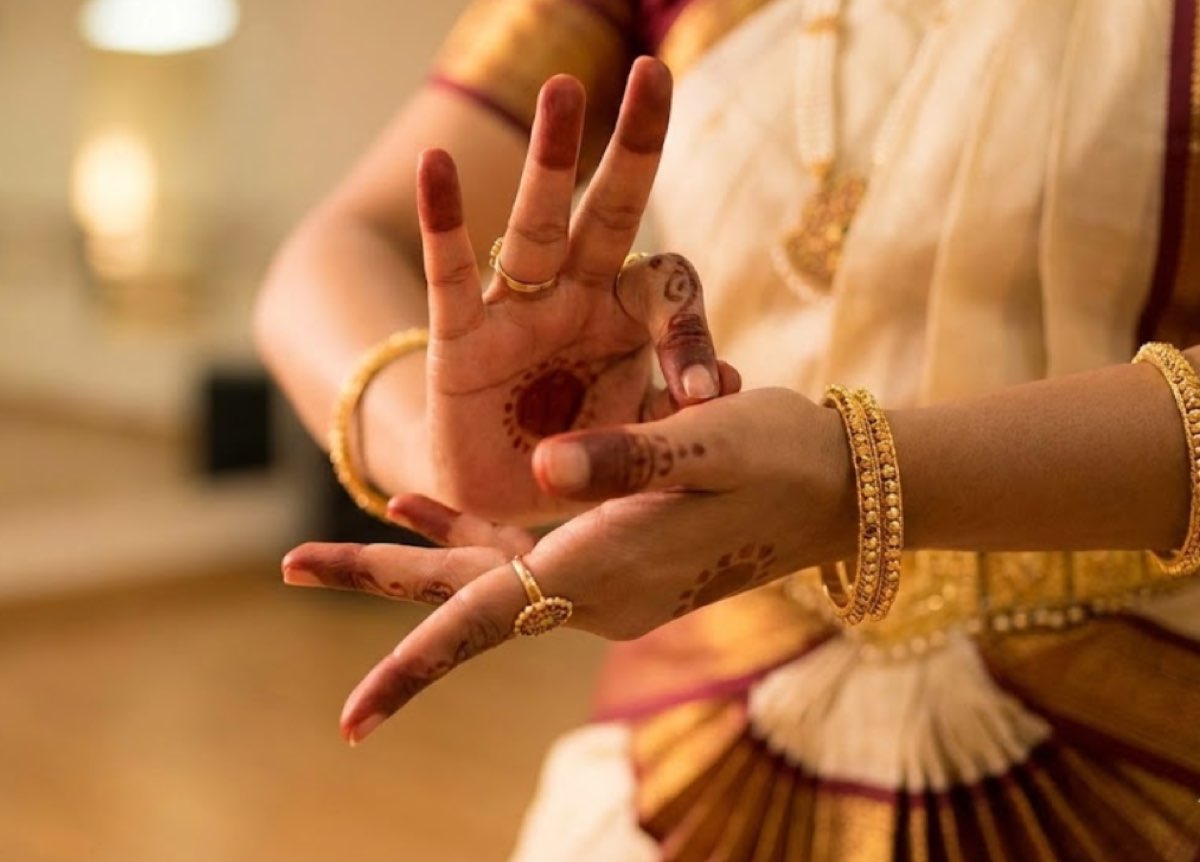
Bharatanatyam, the oldest classical dance tradition of India, is often described as a "visual poetry." While the rhythmic footwork (Nritta) and the emotive facial expressions (Abhinaya) catch the eye, the true architectural strength of this art form lies in its hands.
Mudras, or hand gestures, serve as the intricate vocabulary that allows a dancer to "speak" without uttering a single word. Understanding these gestures is the key to unlocking the spiritual and narrative depth of the dance if you are a curious beginner or someone looking to refine your technique through online Bharatanatyam classes.
What are Mudras? The Science and Soul of Gestures
The word Mudra is derived from the Sanskrit roots "Mud" (joy) and "Dru" (to draw out). Thus, a Mudra is a gesture that "draws out joy" or seals a specific meaning. In the context of Bharatanatyam, these are not merely decorative movements; they are highly codified symbols governed by ancient texts like the Abhinaya Darpanam and the Natya Shastra.
These gestures are divided into two primary categories:
- Asamyuta Hastas: Single-hand gestures (28 primary root mudras).
- Samyuta Hastas: Double-hand gestures (23 primary root mudras).
Together, these 51 "root" gestures can be combined and modified into thousands of permutations to depict everything from the five elements of nature to complex mythological narratives.
Essential Single-Hand Gestures (Asamyuta Hastas)
For many students starting their journey in online Bharatanatyam classes, the first thing they learn is the viniyoga (usage) of single-hand gestures. Here are a few foundational ones:
- Pataka (The Flag): The most basic mudra, where all fingers are extended and joined together. It is used to denote the beginning of a dance, a forest, a river, or even to command "Stop!"
- Tripataka (Three Parts of a Flag): Similar to Pataka but with the ring finger bent. This gesture often symbolizes a crown, a tree, or the act of applying a tilak (mark) on the forehead.
- Alapadma (The Blooming Lotus): Fingers are spread wide and rotated to mimic a flower in full bloom. It represents beauty, grace, and the opening of the soul.
- Shikhara (The Peak): A fist with the thumb held upright. This is used to represent a bow, a hero, or Lord Shiva.
Communicating Through Double Hands (Samyuta Hastas)
When both hands come together, the storytelling becomes even more vivid. Double-hand gestures often represent relationships or complex objects:
- Anjali: Joining both palms together in front of the chest. It is the universal gesture of salutation to God, teachers, and the audience.
- Karkata (The Crab): Fingers of both hands are interlocked. It can represent a crowd, the blowing of a conch shell, or the thick branches of a tree.
- Shivalinga: The right hand in Shikhara is placed over the left palm in Ardhachandra. This is the iconic symbol representing the Hindu deity Shiva.
Why Learn Mudras Through Online Bharatanatyam Classes?
The beauty of modern technology is that this ancient wisdom is now accessible globally. Online Bharatanatyam classes offer a unique advantage for mastering mudras. Because the camera allows for close-up views, students can see the precise angle of a finger or the tension in a palm more clearly than they might from the back of a crowded studio.
Furthermore, these classes provide:
- Slow-motion Replays: Perfect for capturing the subtle transitions between gestures.
- Personalized Feedback: Instructors can zoom in to correct a "droopy" finger or an incorrect thumb placement.
- Theoretical Depth: Most digital platforms provide PDF guides and shlokas that explain the Viniyoga of each mudra, helping students understand why they are moving their hands in a certain way.
Mudras: More Than Movement
The mudras of Bharatanatyam are a testament to the sophistication of Indian culture. They prove that communication doesn't always require a voice. By mastering these gestures, a dancer can transport an audience to a different world, a world of gods, demons, nature, and deep human emotion.
Whether you are practicing in a grand auditorium or your living room through online Bharatanatyam classes, remember that every flick of the wrist and every bend of a finger carries a legacy that is thousands of years old.